Lakshadweep
Thirty-Six Pieces of Turquoise
“The islands teach you a new unit of wealth: the lagoon. Everything else is arithmetic.”
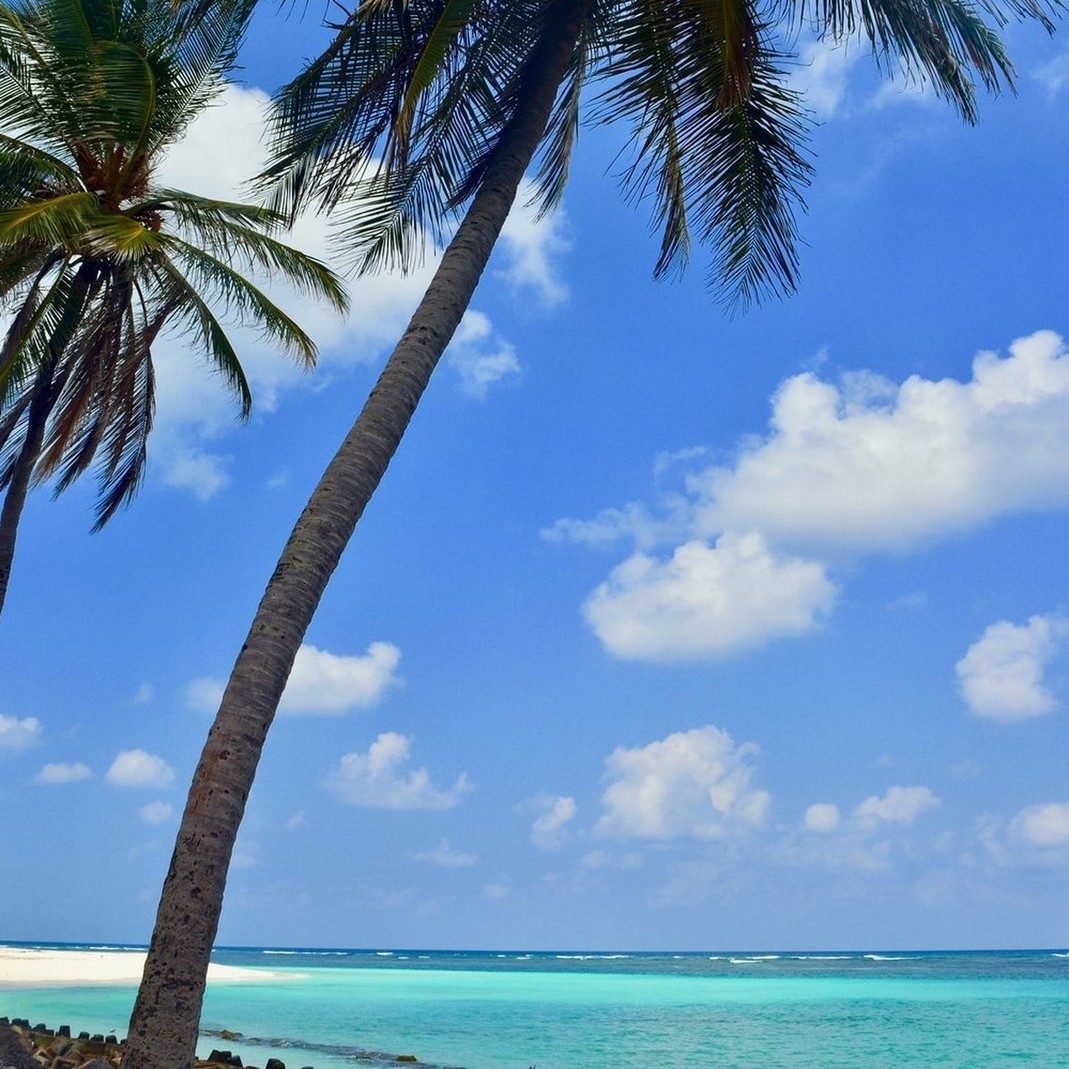
Photo: Asssagar / Wikimedia Commons (CC BY-SA 4.0)
The Hardest Ticket in India
Lakshadweep does not let you wander in, and that is the first thing to love about it. India's smallest Union Territory, thirty-six islands scattered across the Arabian Sea, ten of them inhabited, all of them together adding up to barely thirty-two square kilometres of land guarding four hundred thousand square kilometres of sea, admits visitors only by permit, mostly through official packages, with tourist access limited to a handful of islands. The paperwork took me weeks and taught me patience; the reason for it took me one snorkel to understand. These are coral atolls, the only ones India has, the visible rims of ancient volcanic peaks long sunk beneath the sea, kept above water by nothing but the ongoing labour of living coral. The permit system is not bureaucracy. It is a velvet rope around something genuinely, physically fragile, holding the crowd to what the reef can survive.
I chose the sea route out, because a place this remote deserves to be arrived at slowly: the passenger ship from Kochi, a floating small town of returning islanders, sacks of onions, students coming home from mainland colleges, and one traveller from Andhra being adopted by a card game on D-deck. Fourteen to twenty hours, depending on the sea's mood. Somewhere in the night the swell changed its accent, and at dawn I came up on deck to my first atoll, a pencil line of palms on the horizon, and in front of it, announcing itself before the land did, a colour. The colour. The lagoon-turquoise that no photograph had prepared me for, because photographs cannot show you something that appears to be lit from below.
Everything here came by boat. Even the religion. Even us.From the chapter
A Town on a Sandbar
Kavaratti, the capital, is an island you can walk end to end inside an hour, which does interesting things to the concept of a capital. Government offices under coconut palms; a jetty doing the work of a national highway; and everywhere, the sound I came to associate with the islands, the double hush of surf on the reef's far side and lagoon water on the near, the atoll's own stereo. The islanders are Malayali-speaking Muslims, their society traditionally matrilineal in many families, descended, the accepted history runs, from seafarers of the Kerala coast; Islam is said to have arrived here in the seventh century with the saint Ubaidullah, whose grave on Andrott island the devout still visit. The Ujra mosque in Kavaratti, with its carved wooden pillars and its well whose water the islanders hold to be sweet against all geological probability, felt less like a monument than a family room. A caretaker showed me the ceiling's carving and delivered the island's entire philosophy of history in one line: 'Everything here came by boat. Even the religion. Even us.'
The chapter continues in the book…
- AnticipationThe Hardest Ticket in India
- ArrivalA Town on a Sandbar
- ExplorationThe Republic of the Lagoon
- DiscoveryThe Night the Sea Lit Up
- Traveller's NotebookLakshadweep Essentials
- FarewellThe Arithmetic of Enough
Lakshadweep, from the road

Read Chapter 7 in full
The complete Lakshadweep chapter — with when to go, getting around, what things cost, what to eat and how to travel responsibly — is in 28 Shades of India.