Punjab
Mustard Fields and the Golden Dome
“Punjab's theology fits in a kitchen: whoever comes, eats. Everything else is commentary.”
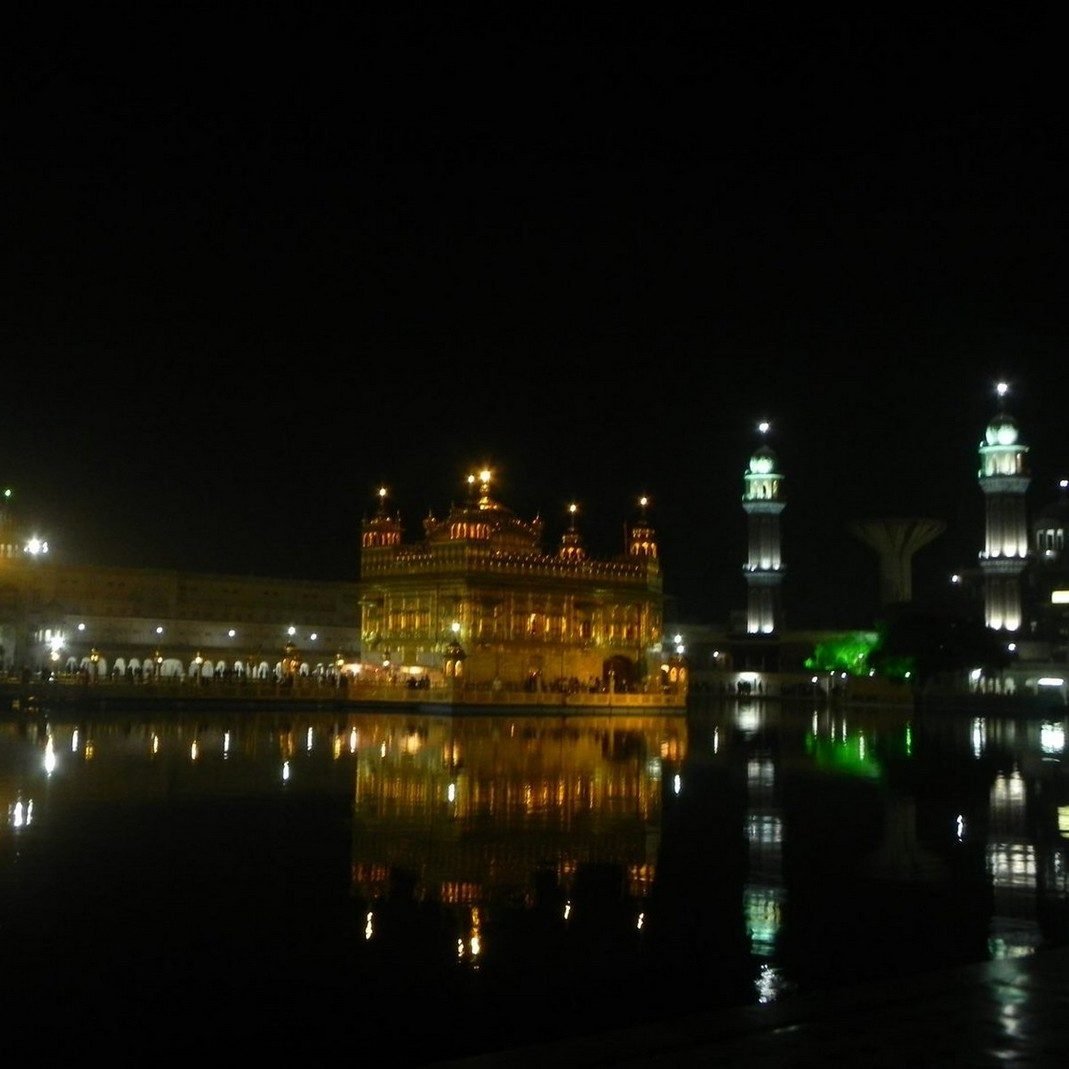
Photo: Susheel Khiani / Wikimedia Commons (CC BY-SA 3.0)
The Land of Five Rivers, Halved
Punjab announces itself from the train window as an argument for the colour green, wheat to every horizon in winter, and in the mustard months, a yellow so total that the film industry has been borrowing it for fifty years. The name means land of five rivers, and carries an amputation: Partition in 1947 cut the province in half, left three rivers there and two here, and ran its line through the middle of a single people speaking a single language, the border's two sides still eat the same food, sing the same folk verses, and grieve, at museums in Amritsar and Lahore respectively, the same year. Every Punjabi family history has a 1947 chapter; my compartment neighbour, a retired army doctor, gave me his grandmother's (a village near Lyallpur, a bullock cart, forty days walking east) unprompted and unadorned, in the tone of a man reciting coordinates. 'Now you understand the state,' he concluded as Amritsar's outskirts began. 'We lost half of everything and decided to be twice as alive. It mostly works.'
We lost half of everything and decided to be twice as alive. It mostly works.From the chapter
The Kitchen at the Centre of the World
You hear the Golden Temple before you see it, the Gurbani kirtan broadcast gently across the surrounding streets, so that the last five minutes of any approach are already inside the shrine. Then the gateway, the marble parikrama, and the thing itself: Harmandir Sahib, sheeted in gold, standing in the middle of the Amrit Sarovar, the pool of nectar that named the city, joined to the shore by one causeway and to everything else by four doors, one in each direction, built open on the instruction of the Gurus to say in architecture what the faith says in scripture: every direction, every caste, every faith, every person, enter. I arrived in the late afternoon, sat on the cool marble edge of the pool as the gold began its evening performance on the water, and stayed through the night ceremony, when the Guru Granth Sahib, the scripture that is itself the eternal Guru, is carried in a golden palki to its rest chamber on the shoulders of volunteers, petals falling, the crowd pressing gently forward for a turn under the weight. A shrine whose central nightly ritual is putting a book to bed: I had seen gods tucked in at Madurai; here it was the word itself.
The chapter continues in the book…
- AnticipationThe Land of Five Rivers, Halved
- ArrivalThe Kitchen at the Centre of the World
- DiscoveryThree Hours at the Sink
- ExplorationThe Garden and the Border
- The TableButter as a Love Language
- FarewellHor Lao
Punjab, from the road

Read Chapter 20 in full
The complete Punjab chapter — with when to go, getting around, what things cost, what to eat and how to travel responsibly — is in 28 Shades of India.