Ladakh
The Moon Within Reach
“Ladakh does not have scenery. Scenery implies a foreground and somewhere else to be. Ladakh is all of it, at once, and you are in it, breathing carefully.”
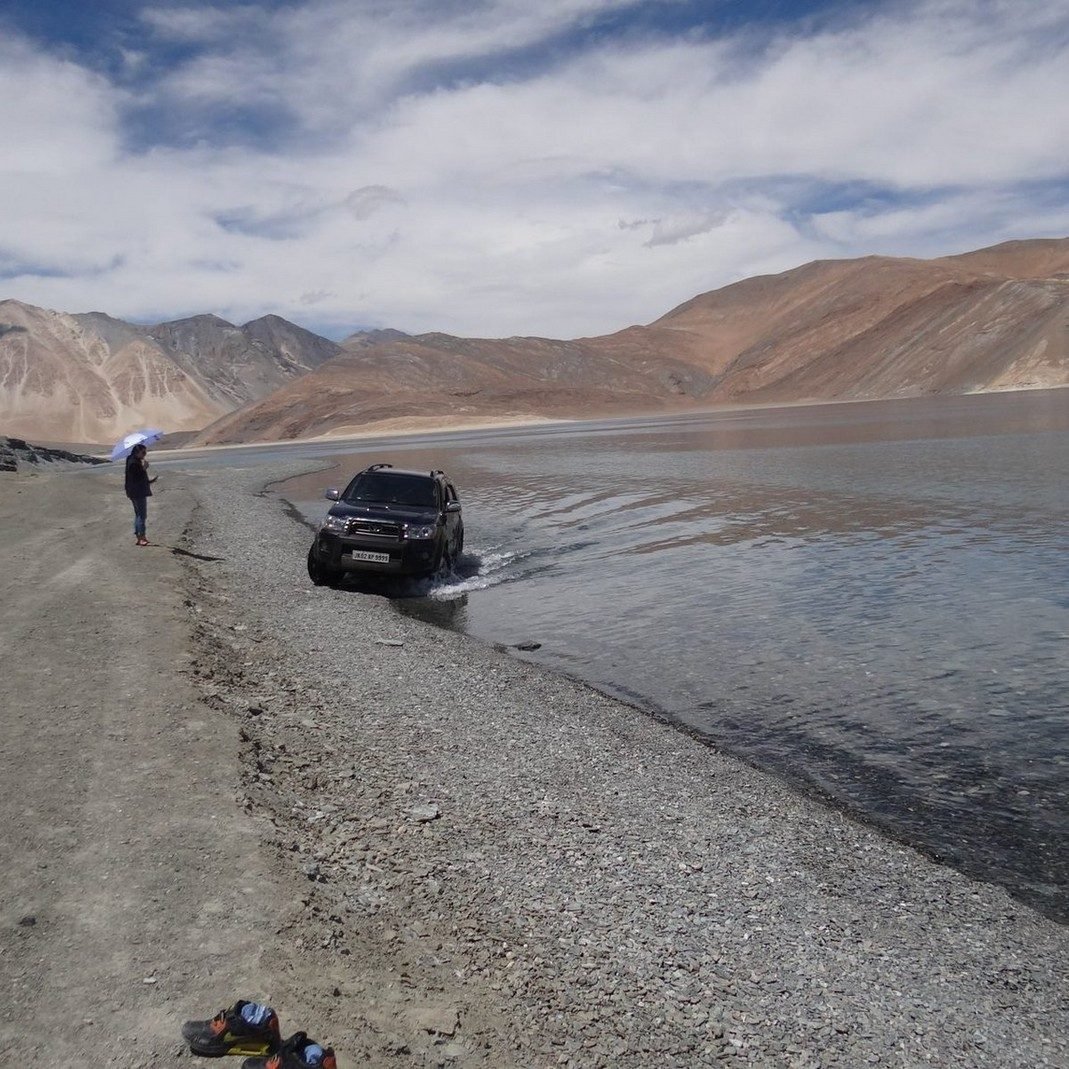
Photo: Haseebtrumboo / Wikimedia Commons (CC BY-SA 4.0)
Crossing the Weather Line
The road from Kashmir to Ladakh performs the most abrupt costume change in Indian geography, and it does it at Zoji La. On the Sonamarg side: pine, meadow, glacier-fed green, the full Himalayan postcard. Then the pass, a gravel ledge through cloud where our shared taxi queued behind army convoys and the driver turned his prayer beads with a thumb while steering with the rest of the hand, and on the far side, within the hour, the world had been reissued in a different edition: no trees, no green except where a river bribed a village into existence, mountains in mineral bands of rust and violet and bone, and light of a hardness I had never breathed in. This is the rain shadow (the Himalaya's main wall wrings the monsoon dry before it gets here) and Ladakh, 'the land of high passes', lives on the far side of India's weather with three hundred days of sun, air at half pressure, and a civilisation that figured out, over a thousand-plus years, how to be not merely alive up here but cheerful. At Drass, which signboards announce as one of the coldest inhabited places on Earth, we stopped for tea, and the stall owner delivered the regional orientation free with the biscuits: 'Down there you have oxygen and worries. Here, less of both.'
Down there you have oxygen and worries. Here, less of both.From the chapter
Leh, Slowly
Leh, at three and a half thousand metres, begins with a mandatory lesson in humility: the first day is for acclimatisation, and the town enforces it through simple physics. I spent mine as prescribed (short walks, long teas, a headache negotiating terms) and let the old town introduce itself at invalid's pace: the nine-storey Leh Palace leaning over the bazaar like a smaller, sun-dried rehearsal of Lhasa's Potala; the lanes below it where Kashmiri, Ladakhi, Tibetan and the odd stray German conduct the apricot-and-pashmina economy; prayer wheels at corners, set spinning by every passing hand including, by day two, mine, out of a courtesy that had stopped feeling foreign months ago. By evening I climbed (slowly, in the approved wheezing style) to Shanti Stupa above the town, where half of Leh gathers to watch the light leave the Stok range peak by peak, and where I first noticed the Ladakhi night switching on behind the sunset: stars in quantities that made Rajasthan's desert sky, months and worlds ago, look like a rough draft.
The chapter continues in the book…
- AnticipationCrossing the Weather Line
- ArrivalLeh, Slowly
- ExplorationThe Painted Republic of Dawn
- DiscoveryThe Lake That Cannot Decide
- The TableCalories as Culture
- FarewellThe Thin Air Ledger
Ladakh, from the road

Read Chapter 26 in full
The complete Ladakh chapter — with when to go, getting around, what things cost, what to eat and how to travel responsibly — is in 28 Shades of India.