Odisha
Chariots of the Sun
“Odisha built a chariot for the sun out of stone, and a kitchen for everybody out of clay pots. Between those two projects lies everything the state believes.”
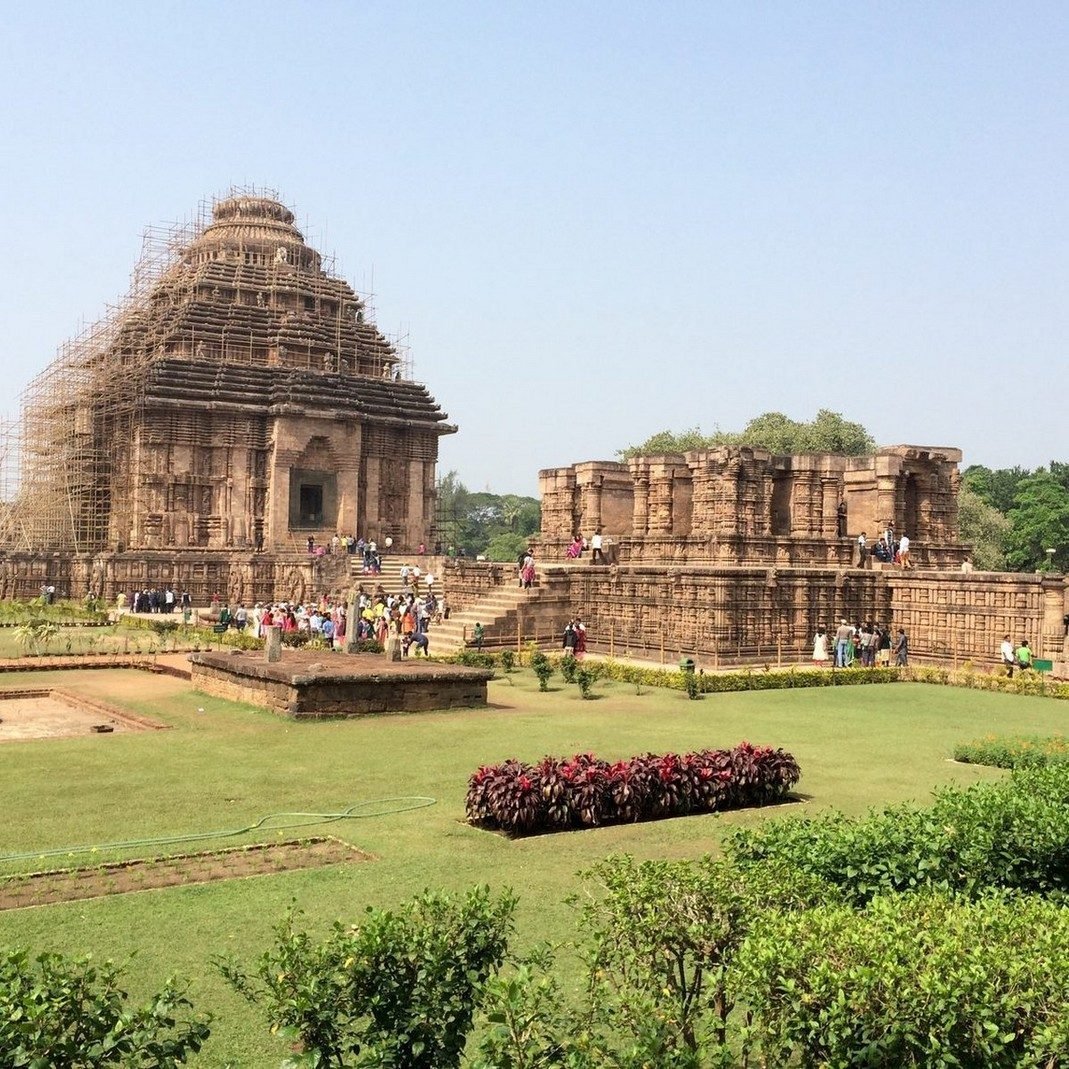
Photo: Arpan Mahajan / Wikimedia Commons (CC BY-SA 4.0)
The Neighbour I Grew Up Beside
Odisha is my home state's northern neighbour. Srikakulam presses against its border, and my childhood was full of its traffic: Puri pilgrims passing through on buses garlanded like grooms, Jagannath's name on lorry mudflaps, and my grandfather's firm classification of the state as 'where the Lord lives'. Which made my arrival strange and overdue in equal measure: I had circled the entire country to reach the place next door, and I came into it carrying, from Bihar and Madhya Pradesh, a debt to settle. At Dhauli, on a low hill above the Daya river outside Bhubaneswar, I stood where the Kalinga war ended, the conquest of this very region, in 261 BCE, whose slaughter broke Emperor Ashoka's appetite for empire and turned him toward the dhamma whose edicts I had been crossing from Sanchi to Sarnath. His rock edict here, carved in Brahmi above a sculpted elephant, is history's rarest document: a victor's public remorse, in stone, addressed to the future. The river below, tradition says, ran red then; it ran quiet and silver now, past paddy and a white peace pagoda. Every empire on this journey had left me monuments to its victories. Odisha opened with the only monument I met to a victory regretted, and the state's whole temperament, I would learn, flows from that hill: strength worn quietly, grandeur without swagger, and a distinct suspicion of anyone in a hurry.
Every empire left me monuments to victories. Odisha opened with the only monument to a victory regretted.From the chapter
The City of Temples and the Frozen Chariot
Bhubaneswar wears its title, the temple city, with archival seriousness: hundreds survive of the thousands that once stood around the Bindusagar tank, a syllabus of the Kalinga architectural style written across a millennium. I learned to read it at Mukteshwar, the small tenth-century gem whose carved torana arch is the style's signature flourish, and graduated at Lingaraj, the eleventh-century giant whose curvilinear tower dominates the old city's skyline (non-Hindus view it, by long custom, from the adjacent platform, the same courtesy Puri would ask of others days later, and the state's temples ask it without apology). But the style's supernova is an hour away on the coast, and I saved it for dawn. Konark (the Sun Temple, built in the thirteenth century by King Narasimhadeva I) is not a building that features a chariot motif. It is a chariot: the entire temple conceived as Surya's vehicle, twelve pairs of carved stone wheels bearing it, seven rearing horses hauling it eternally east toward the sea it once stood nearer.
The chapter continues in the book…
- AnticipationThe Neighbour I Grew Up Beside
- ArrivalThe City of Temples and the Frozen Chariot
- ExplorationThe Lord of the Universe and His Public
- DiscoveryThe Kitchen of the Universe
- The TableThe Cooling Arts
- Traveller's NotebookOdisha Essentials
- FarewellThe Wheel, Read Correctly
Odisha, from the road

Read Chapter 28 in full
The complete Odisha chapter — with when to go, getting around, what things cost, what to eat and how to travel responsibly — is in 28 Shades of India.