Tripura
The Palace in the Water
“I ended in the smallest of the far states, where a woman I had known for an hour put a length of her own weaving over my shoulders because I was a guest, and would not hear of being thanked.”
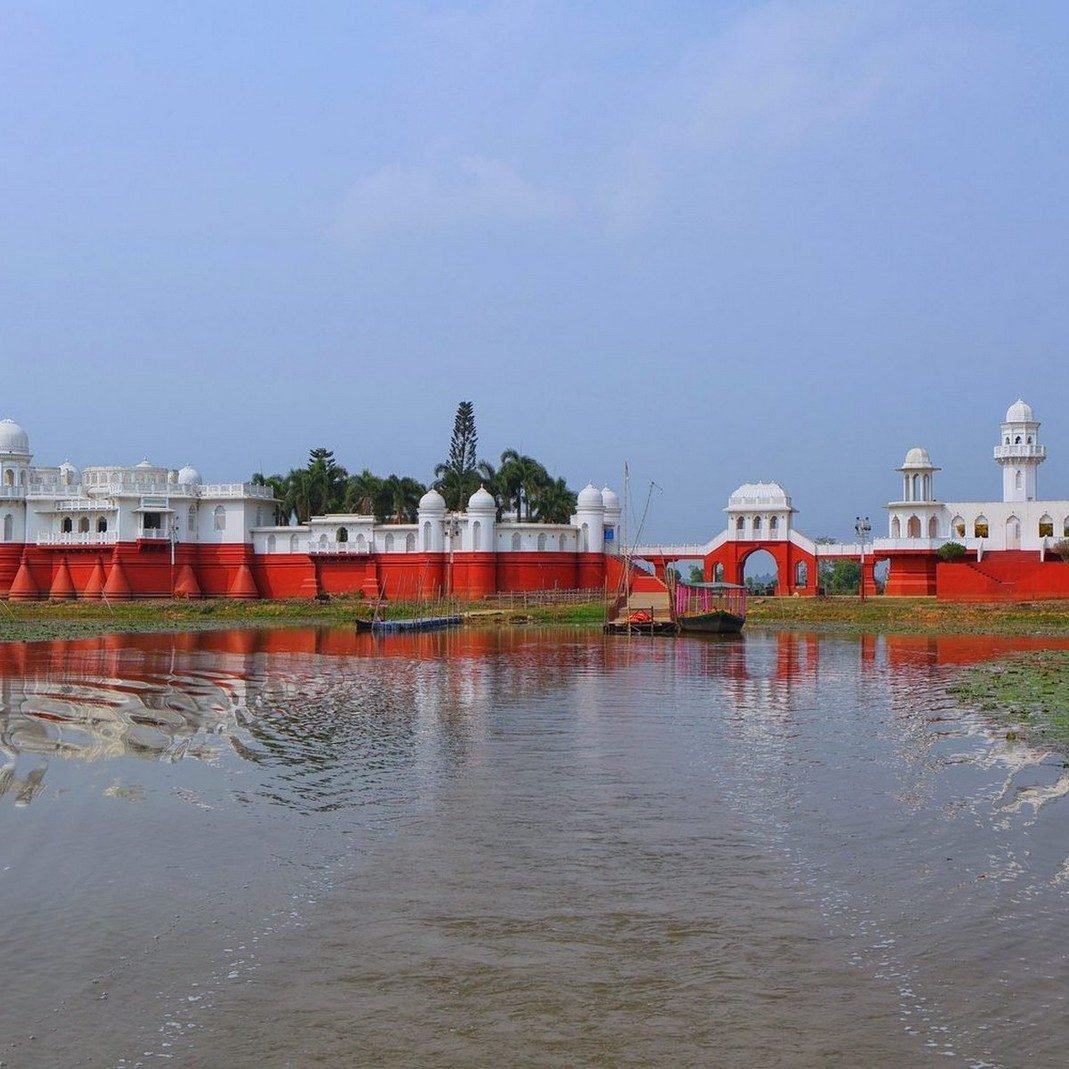
Photo: Kingshuk Mondal / Wikimedia Commons (CC BY 4.0)
The Last Border
Tripura hangs at the bottom of the Northeast like a signature, a small state wrapped on three sides by Bangladesh, joined to the rest of India by one thin corridor of hills, and carrying, for its size, an implausible density of history: the Manikya dynasty that ruled here counts among the oldest continuous royal lines anywhere, its chronicle (the Rajmala) claiming a depth of generations that makes European thrones look like start-ups, and its kingdom joined the republic only in 1949, within my grandparents' adult lives. I crossed into it on the last Sumo of my journey with the specific melancholy of a reader on a favourite book's final chapter (rationing pages, slowing down on purpose) and with the particular carefulness of a person who has understood that this is the last one.
The palace has many rooms, that is the trick.From the chapter
The Palace and the Poet
Agartala is a gentle capital. Bengali and Kokborok on the signboards, cycle-rickshaws still holding their own, a border so close that Bangladeshi and Indian mobile networks negotiate over the bazaars, and at its centre stands the Ujjayanta Mahal, the Manikyas' great white palace of 1901: domes, tiled floors, Mughal-style gardens, built after an earthquake took its predecessor, named, this is the detail I loved, by Rabindranath Tagore. The poet and this small kingdom kept a lifelong friendship: the Manikya kings recognised and funded Tagore early (the young Maharaja Radha Kishore's support reached Santiniketan when it mattered) and Tagore set his novel and play of conscience, Rajarshi and Visarjan, in this very court, returning across decades as guest and family friend. The palace is now the state museum, and its galleries walk the visitor through the double inheritance the state still balances: the nineteen Tiprasa tribes of the hills. Tripuri, Reang, Jamatia and more, with their bamboo craft, their risa and rignai weaves, their hojagiri dance in which girls perform balanced on earthen pitchers, and the Bengali plains culture that migration and Partition made the valley's majority. An old gallery attendant, closing up, gave me the museum's summary at the door: 'Small state, two big families, one house. Mostly we manage. The palace has many rooms, that is the trick.'
The chapter continues in the book…
- AnticipationThe Last Border
- ArrivalThe Palace and the Poet
- ExplorationThe Hill of Ten Million Faces, Minus One
- DiscoveryThe Goddess of the Three Worlds
- The TableFerment and Pineapple, Two Kitchens in One House
- FarewellThe Thirty-sixth Shade
Tripura, from the road

Read Chapter 36 in full
The complete Tripura chapter — with when to go, getting around, what things cost, what to eat and how to travel responsibly — is in 28 Shades of India.