Goa
Beyond the Postcard
“I came to Goa looking for a beach. Goa, patiently, kept handing me a home instead.”
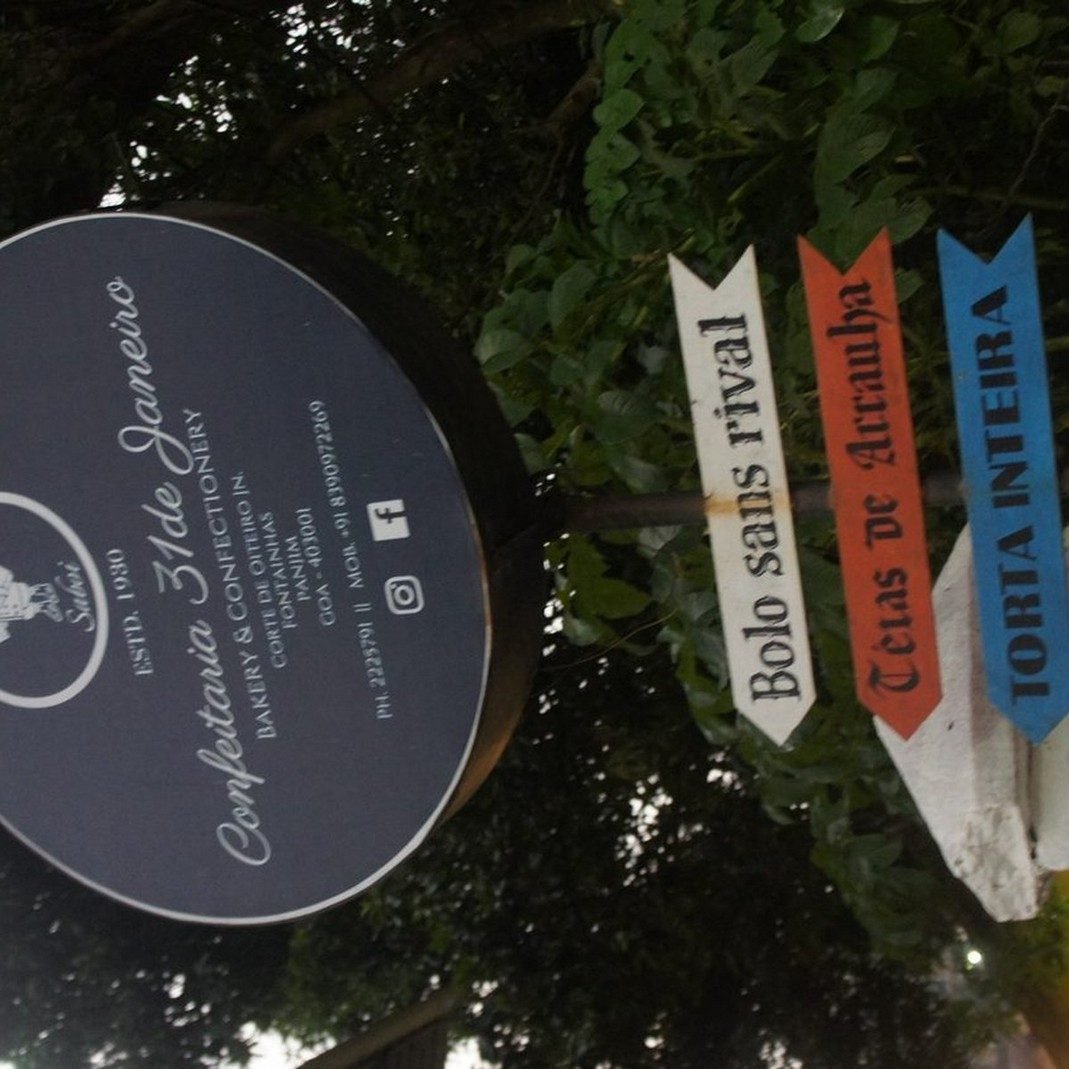
Photo: Fredericknoronha / Wikimedia Commons (CC BY-SA 4.0)
The Most Photographed Stranger in India
No state arrived in my imagination more thoroughly pre-packaged than Goa. I had seen it a thousand times before I saw it once, the film songs shot on its beaches, the college trip photographs, the sunburnt clichés. Goa was where the rest of India went to be briefly unlike itself, and I nearly treated it that way: three days, two beaches, one sunset, next state. What changed my mind was the train. The Konkan Railway from the south is among the most beautiful lines in the country, an engineering feat of the 1990s that stitched the west coast together through nearly a hundred tunnels and two thousand bridges, and somewhere after Karwar, as we crossed a river estuary with fishing canoes arranged on it like punctuation, an elderly Goan gentleman across from me asked how long I was staying. Three days, I said. He looked at me the way teachers look at promising students with bad study plans. 'Three days is enough for the Goa in the photos,' he said. 'The real one needs you to slow down. We have a word for it, susegad. Not lazy. Content. There is a difference, and it takes more than three days to learn it.' I stayed twelve.
Not lazy. Content. There is a difference, and it takes more than three days to learn it.From the chapter
The Quarter That Kept Its Colours
I began in Panjim, in Fontainhas, the old Latin quarter, where the houses are painted in colours with opinions (ochre, cobalt, pistachio, rose) and the law, wonderfully, requires them to stay that way, repainted after every monsoon. The lanes are narrow, the balconies wrought-iron, the window panes made in the old style from flattened oyster shells that turn the light milky. At the corner bakery a poder was unloading his morning round. Goa's bread-sellers still announce themselves by horn, delivering poi and pao door to door by bicycle as they have for generations, a daily proof that the Portuguese may have left in 1961 but their bakeries had signed a longer lease. Four and a half centuries of Portuguese rule (longer than the British held anything in India) soaked into the language, the surnames, the music and the food, and then Goa did what Goa does: absorbed it all into something unmistakably its own and unmistakably Indian, seasoned to local taste.
Upriver lies what remains of the empire's ambition.
The chapter continues in the book…
- AnticipationThe Most Photographed Stranger in India
- ArrivalThe Quarter That Kept Its Colours
- ExplorationRivers, Islands, and the Inland Green
- DiscoveryThe Night of the Mando
- The TableFish, Curry, Rice, and Four Centuries
- FarewellWhat the Tide Carries
Goa, from the road

Read Chapter 9 in full
The complete Goa chapter — with when to go, getting around, what things cost, what to eat and how to travel responsibly — is in 28 Shades of India.