Gujarat
Salt, Lions and the White Desert
“Gujarat measures wealth the old way: in what you can trade, what you can stitch, and how far you are willing to walk for an idea.”
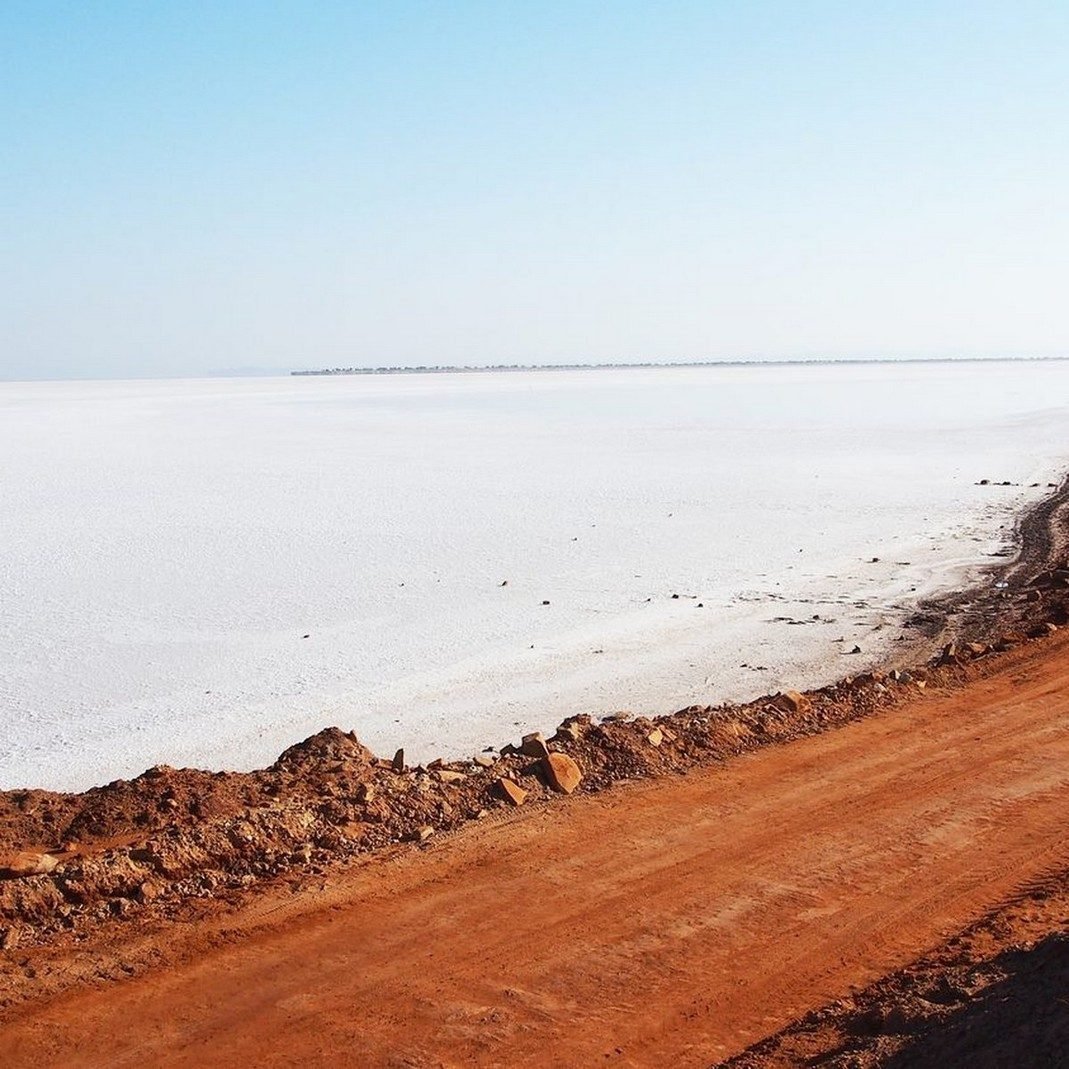
Photo: Prof Ranga Sai / Wikimedia Commons (CC BY-SA 4.0)
The Merchant's Compass
Every state announces itself through its trains, and Gujarat's announcement was commerce. The compartment north from Mumbai filled with men and women comparing invoices, a diamond polisher from Surat explaining to a pharmaceuticals salesman why nine in ten of the world's diamonds pass through his city's workshops, and an elderly woman across from me managing, by phone, what I gradually understood to be a snack empire of considerable scale. When she learned what I was doing (one boy, thirty-six destinations, no revenue model) she was not scandalised, which surprised me, but she did require a business plan. 'You are collecting stories,' she ruled eventually, distributing homemade thepla to the entire bay as though closing a deal. 'Inventory is good. Now you must learn distribution.' I have thought about her at every book-shaped moment since. Gujaratis have traded across the western sea since the harbours of the Indus civilisation (Lothal, in this state, had a dockyard four and a half thousand years ago) and the instinct has not skipped a generation since.
He took the cheapest commodities on earth (salt, thread, walking) and leveraged them against an empire.From the chapter
The City of Gates and the House by the River
Ahmedabad was India's first city to be named a UNESCO World Heritage City, and its old quarter explains the honour within an hour. The walled city is built of pols, self-contained residential streets, each a micro-village with its own gate, well, chabutaro (a carved bird-feeding tower, because the old city budgeted for sparrows), and secret connecting doors between houses that turned neighbourhoods into networks. I took the dawn heritage walk from the Swaminarayan temple through the pol country: carved wooden facades leaning over lanes, ninety-year-old men doing newspaper analysis on stoops, and at the end, the Sidi Saiyyed mosque's western windows, the famous jali, a tree of life carved through yellow stone so finely it reads as lace, sixteenth-century stonework that has become the logo of the city and the benchmark, for me, of what patience does to rock in this country.
Across the Sabarmati river stands the small whitewashed compound from which the twentieth century was quietly redirected. Gandhi's Sabarmati Ashram, his home and headquarters from 1917 to 1930, keeps his room as he left it: a floor mat, a spinning wheel, a writing desk low enough to require humility.
The chapter continues in the book…
- AnticipationThe Merchant's Compass
- ArrivalThe City of Gates and the House by the River
- ExplorationWells That Are Palaces, Villages That Are Looms
- DiscoveryThe Night the Ground Turned to Sky
- The TableThe Thali That Refuses to End
- FarewellSalt, Again
- PostscriptThe Train from Veraval
Gujarat, from the road

Read Chapter 11 in full
The complete Gujarat chapter — with when to go, getting around, what things cost, what to eat and how to travel responsibly — is in 28 Shades of India.