Himachal Pradesh
Roads That Climb Into Weather
“In the plains, weather is what happens to your day. In Himachal, weather is where you are going.”
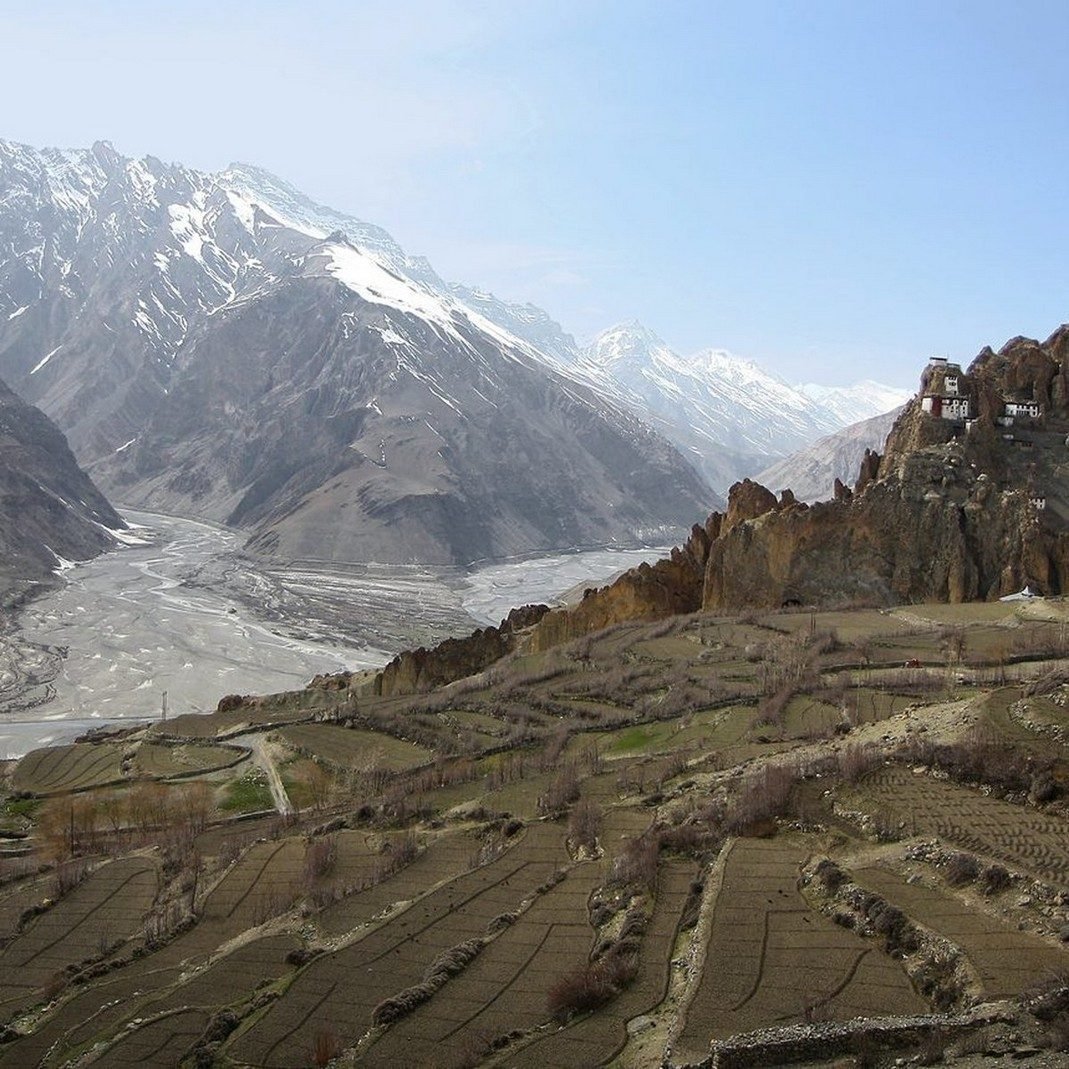
Photo: Rupak Sarkar / Wikimedia Commons (CC BY-SA 4.0)
The First Real Mountains
I had seen hills on this journey (the Ghats twice, the Aravallis, the plateau's worn shoulders) but I had never seen mountains, not the proper nouns, and I knew it the moment the Kalka–Shimla toy train made its first honest turn. The narrow-gauge line, a UNESCO World Heritage railway now well past its hundredth birthday, spends five hours doing what a highway does in two, and that is precisely its argument: a hundred-plus tunnels, nearly nine hundred bridges, deodar forests closing over the carriages like well-wishers, and at every curve a fresh instalment of altitude. My window companions were a Shimla schoolteacher and her mother, who between them narrated the route by heart, tunnel numbers, the legend of Barog and the engineer the longest tunnel is named for, which bakery at which station. Somewhere past Solan the air changed category (thinner, resin-scented, carrying its first genuine chill) and the teacher watched me pull on my Panipat blanket with a connoisseur's approval. 'Good. You came prepared,' she said. 'People come to the mountains dressed for the postcard. The mountains dress for themselves.'
People come to the mountains dressed for the postcard. The mountains dress for themselves.From the chapter
The Ridge and the Roads Beyond
Shimla wears its history like a slightly absurd inherited coat, and knows it. The summer capital of the British Raj (the empire governed a fifth of humanity, for half of each year, from this ridge) keeps its Gaiety Theatre, its Gothic church on the Ridge, its Mall Road where traffic is banned and evening promenading is constitutionally protected, and the Viceregal Lodge, a Scottish baronial pile where the Partition conferences were held and where the paperwork of my grandparents' world was signed; it is now, in one of history's better jokes, an institute for scholars. I liked Shimla the way one likes an old professor. But Himachal's 真 self begins where the postcards thin out, and I had planned my route accordingly: east and north on NH-5, the old Hindustan–Tibet road, into Kinnaur, where the highway becomes a ledge blasted into vertical rock, the Sutlej roars a kilometre of air below, and the bus conductor collects fares with one shoulder out the door, calm as a man watering plants. Kinnaur's villages (Sangla, Chitkul, the last village before old Tibet) sit among orchards and slate-roofed temples where the valley's gods hold legal title to land. And beyond the Kinnaur gates, the world changes planets: the trees surrender, the colours go mineral, and the road climbs into Spiti, 'the middle land' between India and Tibet, a high-altitude cold desert where villages stand green as postage stamps on a canvas of ochre and grey.
The chapter continues in the book…
- AnticipationThe First Real Mountains
- ArrivalThe Ridge and the Roads Beyond
- ExplorationThe Middle Land
- DiscoveryA Postcard from the Top of the World
- The TableButter, Buckwheat and the Orchard Economy
- Traveller's NotebookHimachal Essentials
- FarewellRemember This Air
Himachal Pradesh, from the road

Read Chapter 23 in full
The complete Himachal Pradesh chapter — with when to go, getting around, what things cost, what to eat and how to travel responsibly — is in 28 Shades of India.