Sikkim
A Kingdom of Clouds
“Sikkim keeps the highest mountain in India and has never stood on top of it. That refusal, I came to think, is the state's entire philosophy, visible from every window.”
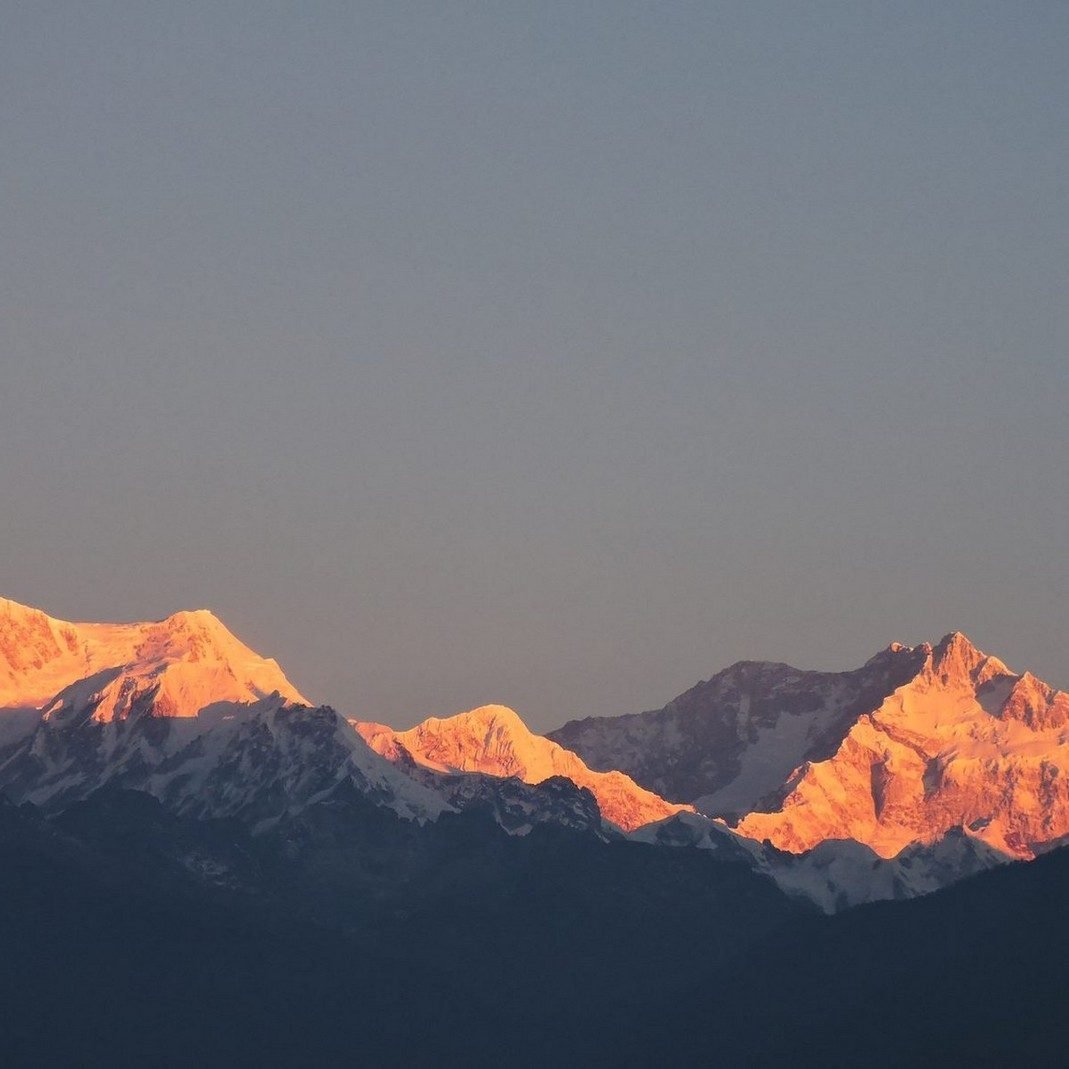
Photo: Subhamwiki1984 / Wikimedia Commons (CC BY-SA 4.0)
The Youngest State, the Oldest Manners
Sikkim is the country's second-smallest state and its most recent by one particular measure: until 1975, within living memory, it was a kingdom, the Buddhist monarchy of the Chogyals, wedged between Nepal, Tibet and Bhutan, which merged with India by referendum the year the world was watching other things. The shared jeep from the Bengal plains climbed along the Teesta's jade gorge (the river that is the state's spine, prayer-flagged at every bridge) and the border formalities at Rangpo (Sikkim checks permits with the courtesy of a kingdom receiving guests, which is precisely the institutional memory at work) delivered me by evening into Gangtok, a capital arranged on a ridge like an audience facing a stage. The stage, when the clouds allow, is Kanchenjunga (at 8,586 metres the highest mountain in India and third on Earth) and my first Sikkim lesson came from the hotel boy who carried my rucksack up four flights and opened the curtains with a flourish on a wall of white cloud. 'Mountain is there,' he said, with total confidence, pointing at nothing. 'Sometimes he shows. You wait properly, he shows.' Waiting properly, I would learn, is a Sikkimese discipline with its own syllabus.
Mountain is there. Sometimes he shows. You wait properly, he shows.From the chapter
The Republic of Small Courtesies
Gangtok recalibrates an Indian traveller within a day, chiefly through the absence of things: horns, litter, hurry. MG Marg, the pedestrian high street, is swept, flower-boxed, smoke-free and traffic-free by law, and functions in the evenings as an open-air living room where the whole town promenades. Lepcha, Bhutia and Nepali Sikkim in one unhurried current, momos steaming at the margins. The state's tidiness is not cosmetic; it is policy with a worldview. Sikkim banned plastic bags back in the late 1990s, made itself India's first fully organic state in 2016 (every farm, chemical-free, by legislation and long persuasion) and treats its environment the way other states treat their monuments. Above the town, the Enchey and Rumtek monasteries hold the state's spiritual weather: Rumtek, seat-in-exile of the Karmapa lineage, its golden stupa room ringed by murals and by the particular hum of a working monastery, debate slaps echoing from the shedra courtyard, a novice sprinting somewhere with a kettle, the sacred and the domestic sharing staff, as they had at Thiksey, at Tabo, at every gompa that had taught me the same lesson at increasing altitudes: continuity is maintenance, performed daily, by the young.
The chapter continues in the book…
- AnticipationThe Youngest State, the Oldest Manners
- ArrivalThe Republic of Small Courtesies
- ExplorationLakes That Grant, Valleys That Bloom
- DiscoveryThe Mountain They Refuse to Climb
- The TableFermentation as Heritage
- FarewellWaiting Properly
Sikkim, from the road

Read Chapter 29 in full
The complete Sikkim chapter — with when to go, getting around, what things cost, what to eat and how to travel responsibly — is in 28 Shades of India.