Manipur
The Jewel and the Floating Lake
“Manipur gave the world polo, one of its most refined classical dances, and a lake where the land itself floats. The jewel of India, Nehru called it. The jewel, I found, is mostly water.”
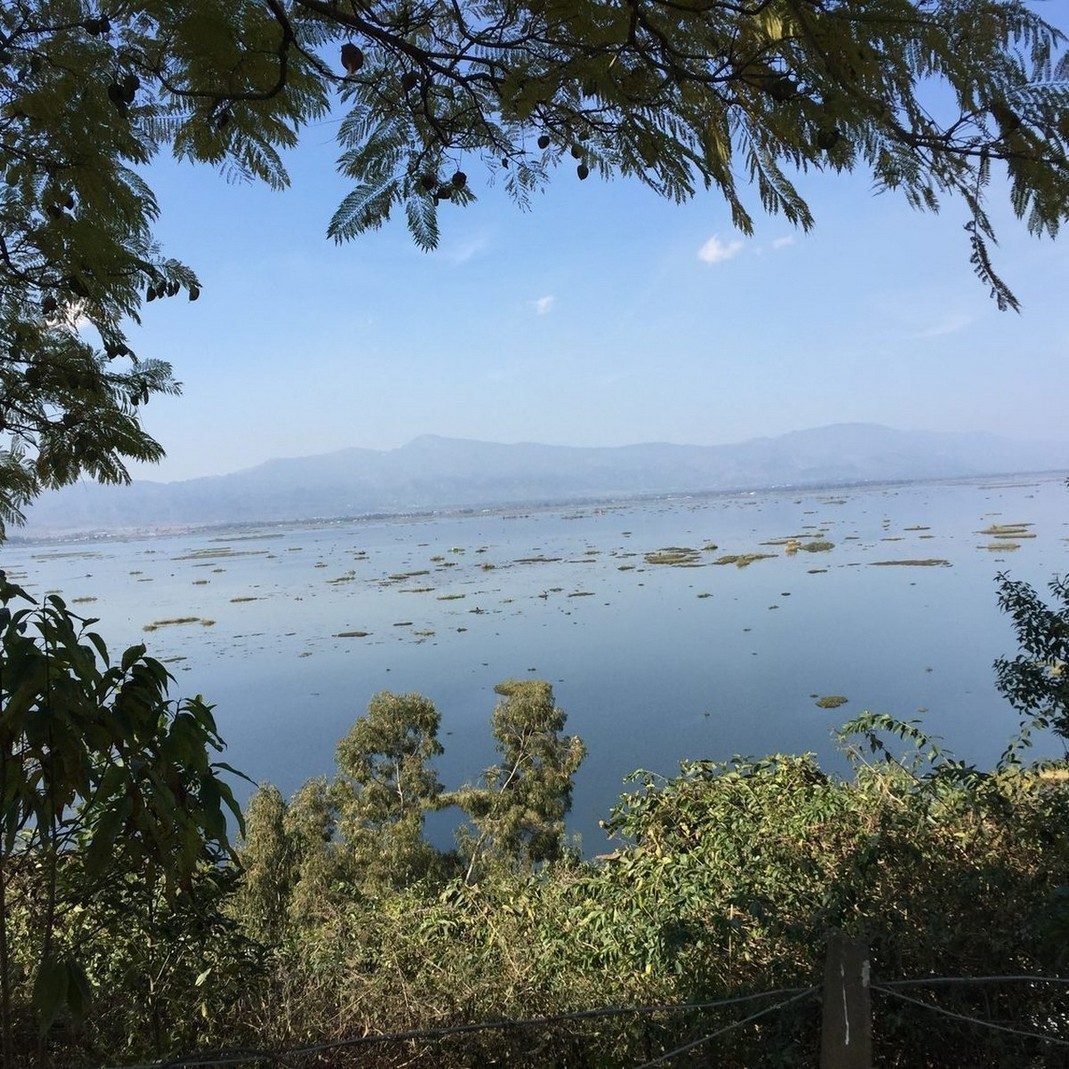
Photo: Laishram Ashakiran / Wikimedia Commons (CC BY-SA 4.0)
Into the Bowl
Manipur is built like a secret: a broad, fertile oval valley, the Imphal plain, held in a ring of blue hills, the Meitei civilisation of the floor encircled by the Naga and Kuki-Zo peoples of the ranges, a geography that has shaped everything from its kingdoms to its griefs. The state's recent years have included real conflict and real pain, and I travelled, as in a few other chapters of this book, on the careful protocol: current advisories checked, local guidance followed, plans held lightly. What the protocol cannot prepare you for is the valley's beauty when the road crests the last ridge, paddies in every green, lotus ponds, the sacred Kangla's groves at the centre of Imphal, and southward, catching the light like dropped mirror-glass, Loktak: the largest freshwater lake of the Northeast, and the strangest great lake in India, because much of what looks like its shore is not shore at all. It floats.
Governments change. The market does not close. Who is more permanent?From the chapter
The Market of Mothers
Imphal's heart is not a palace or a mall but the Ima Keithel, the Mothers' Market, held to be the largest market in the world run entirely by women: thousands of Imas presiding over three great halls and their spillover streets, selling everything the valley makes, fish fresh and fermented, vegetables in botanical-garden variety, the shot-silk phaneks and finely striped textiles of Meitei weaving, brassware, herbs, gold. Men may shop; men may carry; men may not trade. The institution is centuries old, born, the accepted history runs, of an era when compulsory labour systems took the valley's men away and its women built the economy in their absence, and it has been the city's political nerve-centre ever since: the Imas of the Keithel led the Nupi Lan, the women's wars against colonial rice policies, and their successors, the torch-bearing Meira Paibi mothers, have patrolled Manipur's nights through every crisis since. I spent a morning being commanded through it, an Ima selling ngari corrected my pronunciation, another sold me a phanek-weave scarf 'for your mother, not for you', a third, hearing my project, delivered the market's constitutional theory over her scales without pausing the arithmetic: 'Governments change. The market does not close. Who is more permanent?' It was Lewduh's lesson from Meghalaya, restated with three thousand more stalls and total institutional confidence: in the Northeast, I noted for the final time, the commanding heights of the economy frequently wear their hair in a bun.
The chapter continues in the book…
- AnticipationInto the Bowl
- ArrivalThe Market of Mothers
- ExplorationThe Dance, the Game, the Flag
- DiscoveryA Night on the Floating Earth
- The TableFerment, Herb and the Black Rice
- Traveller's NotebookManipur Essentials
- FarewellThe Technique
Manipur, from the road

Read Chapter 34 in full
The complete Manipur chapter — with when to go, getting around, what things cost, what to eat and how to travel responsibly — is in 28 Shades of India.