Nagaland
The Hornbill's Country
“In Nagaland every village was once a republic, every shawl is a document, and the fiercest warriors I met were guarding, of all things, a forest full of birdsong.”
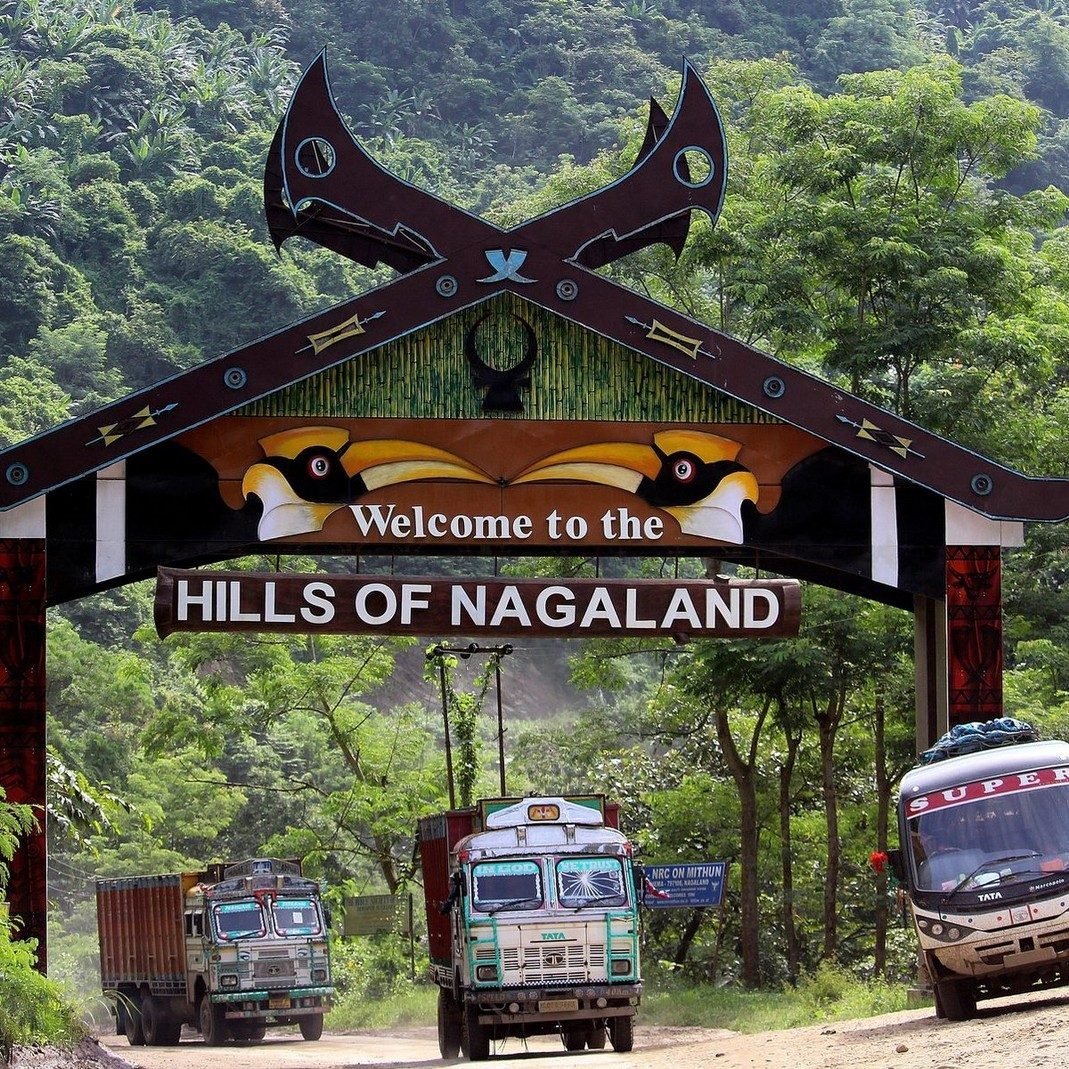
Photo: Girish Mohan P K / Wikimedia Commons (CC BY-SA 4.0)
Reading the Shawls
The Sumo from the Assam plains climbed into Nagaland through gates that make the state's structure plain: this is a land of hill villages that were, until living memory, sovereign republics (each on its ridge, each with its own dialect, council, terraces and wars) federated now into a state of sixteen-odd major tribes whose common language, Nagamese, had to be invented in the marketplace because no single tongue would serve. My education began in the vehicle itself, from a Kohima college lecturer who noticed me noticing her shawl. Naga shawls, she explained, are documents: patterns, bands and colours encode the wearer's tribe, and traditionally their standing, certain designs were earned, not bought, through feasts of merit in which a household gave away its wealth to the village and received, in return, the right to wear its generosity for life. 'You are reading my grandfather's dinner parties,' she said, entirely serious. 'He fed the village three times. We are still wearing it.'
You are reading my grandfather's dinner parties. We are still wearing it.From the chapter
The Tennis Court on the Hill
Kohima, the ridge-top capital, holds one of the most quietly devastating acres in Asia. In the spring of 1944, the Japanese advance into India was stopped here, the battle of Kohima, fought at brutally close quarters across the district commissioner's garden, the two lines at one point separated by the width of his tennis court. The Commonwealth War Cemetery now terraces that same hillside: nearly one and a half thousand graves in perfect quiet above the town's traffic, the old tennis court's white lines preserved in concrete among them, and at the base, the epitaph that has outgrown the war it was written for: When you go home, tell them of us and say, for your tomorrow, we gave our today. I walked the terraces in the late afternoon with schoolchildren doing homework on the benches and a gardener deadheading roses among the headstones (seventeen-year-olds from Yorkshire, Punjab, Nepal, the Naga hills themselves) and found the place did what Jallianwala Bagh and the Cellular Jail had done: it retired every adjective I had brought. Below, Kohima's evening market was starting up, gospel practice drifted from a church, and the town went about the tomorrow that had been so expensively purchased on its lawn.
The chapter continues in the book…
- AnticipationReading the Shawls
- ArrivalThe Tennis Court on the Hill
- ExplorationThe Festival of Festivals
- DiscoveryThe Warriors Who Guard the Birdsong
- The TableSmoke, Ferment and the King
- Traveller's NotebookNagaland Essentials
- FarewellBetter Fame
Nagaland, from the road

Read Chapter 33 in full
The complete Nagaland chapter — with when to go, getting around, what things cost, what to eat and how to travel responsibly — is in 28 Shades of India.