Mizoram
Songs on the Blue Ridges
“Mizoram runs on a word my language does not have — and after a week of watching the word at work, I concluded my language is the poorer state.”
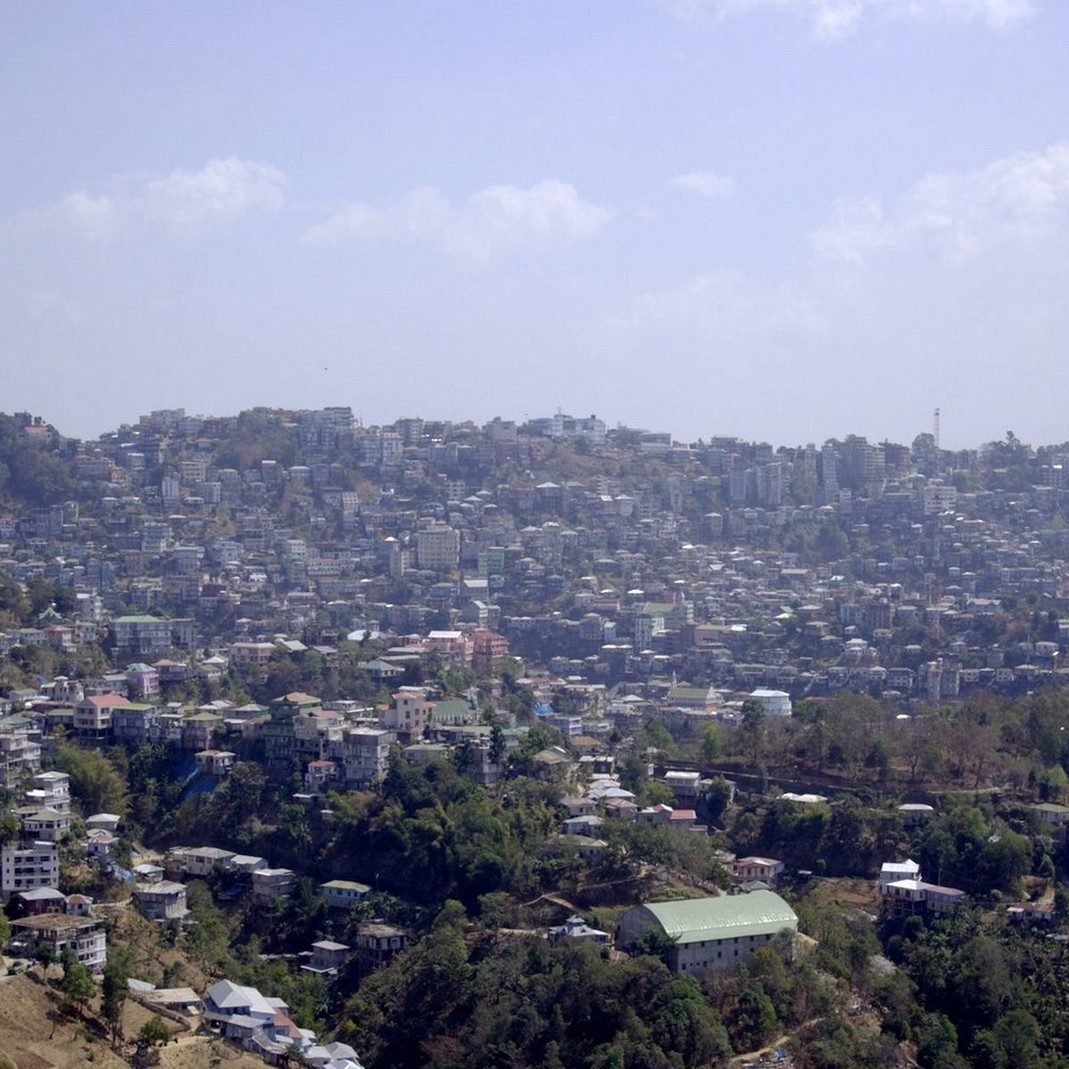
Photo: Bogman / Wikimedia Commons (CC BY-SA 3.0)
The Quietest Traffic in India
Everyone who had been to Mizoram told me the same first fact, and I disbelieved it until the Sumo crested into Aizawl: the traffic does not honk. The capital pours along its ridgetops in tiers, houses stilted out over blue-hazed valleys, streets that are ridgelines with shops attached, and its famously narrow roads move in a self-organised courtesy that has made national news more than once: cars zipper-merging without instruction, two-wheelers waiting their turn, and a silence, by Indian urban standards, that felt at first like a malfunction. My driver, a young Mizo gospel-choir tenor named Zothana who had sung most of the climb from Silchar, explained it as we descended into the evening lights: 'Honking is telling another person he is in your way. Here that is a very big statement. You must be sure.' It was my first sample of the code I had come to see, the one everyone names with a word Zothana pronounced for me slowly, twice, like a gift that required assembly: tlawmngaihna.
Honking is telling another person he is in your way. Here that is a very big statement. You must be sure.From the chapter
The Choir State
Mizoram's statistics sketch an outlier: among India's most literate states, overwhelmingly Christian since the missionary decades a century ago, its society organised less by caste or class than by church, neighbourhood and the mighty YMA, the Young Mizo Association, a voluntary body with branches in virtually every locality and membership that approaches the adult population itself. Aizawl's texture follows: church spires punctuating every ridge, choir practice audible on evening walks the way traffic is audible elsewhere, Sunday observed so completely that the city effectively closes and sings. I attended a service at a big Presbyterian church on Zothana's invitation, understanding nothing of the Mizo sermon and everything of the four-part harmony, congregational singing at a standard most countries would ticket, and afterwards was fed, interrogated kindly, and adopted for the week by his extended family, which is the state's standard processing procedure for strangers. The old pre-Christian culture, far from erased, runs underneath like a water table: the Cheraw, the bamboo dance, women stepping in flashing patterns between clapped bamboo staves, among the oldest Mizo traditions, opens every festival; the great Chapchar Kut spring festival fills the streets in traditional dress each March; and the weave of the puan, the Mizo textile worn by all generations, carries its patterns forward with the same documentary seriousness I had learned to read in Nagaland.
The chapter continues in the book…
- AnticipationThe Quietest Traffic in India
- ArrivalThe Choir State
- ExplorationThe Bamboo Clock and the Peace
- DiscoveryThe Word at Work
- The TableThe Gentle Smokehouse
- FarewellThe Word, Packed
Mizoram, from the road

Read Chapter 35 in full
The complete Mizoram chapter — with when to go, getting around, what things cost, what to eat and how to travel responsibly — is in 28 Shades of India.