Arunachal Pradesh
First Light on India
“The state's name means 'land of the dawn-lit mountains'. I went to the far end of it to watch the country's first sunrise, and found a valley where the sun is not scenery but scripture.”
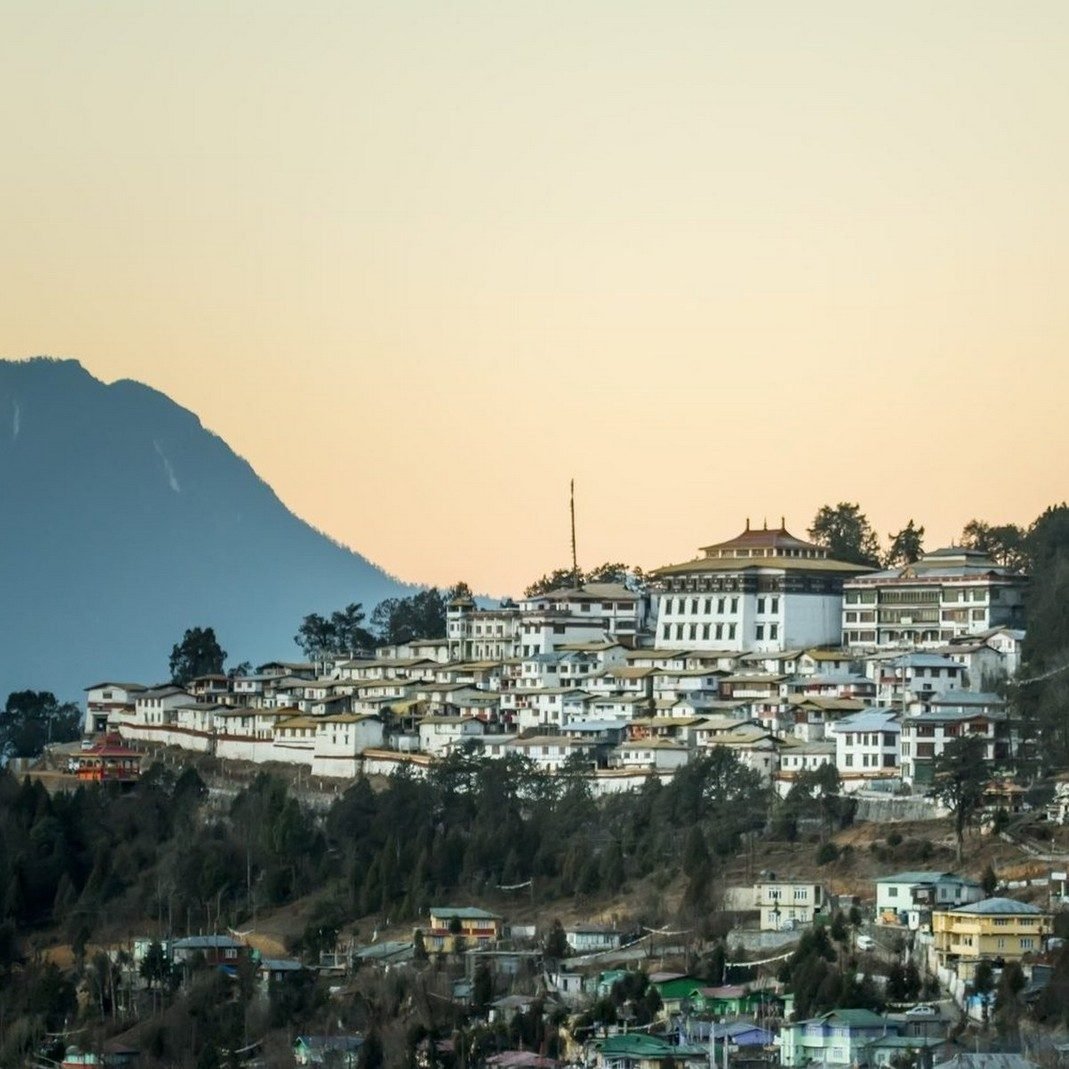
Photo: Vikramjit Kakati / Wikimedia Commons (CC BY-SA 4.0)
The Largest Unknown
Arunachal Pradesh is the largest state of the Northeast and the least visited state of consequence in the entire country, a Himalayan territory the size of a serious European nation, holding twenty-six major tribes and over a hundred sub-tribes, languages by the dozen, forests that hide species science is still cataloguing, and a border with Tibet that keeps its politics permanent and its permits mandatory. Even Indians need an Inner Line Permit to enter, a colonial-era instrument turned protective membrane, and the paperwork, done online in a day, has the useful side effect of making arrival feel like being granted something. Which it is. My Sumo crossed the Assam plain's last paddies at Bhalukpong and began to climb into a wall of forested ridges with cloud caught in every fold, and the driver, a young Monpa returning home from Tezpur, set the state's scale gently: 'How many days you have?' Twelve, I said, pleased with myself. He laughed with genuine kindness. 'Twelve days. Okay. You will see two valleys properly. Choose well. People spend twelve years and see six.'
People spend twelve years and see six valleys. Choose well.From the chapter
The Road to Tawang
I chose, as most first-timers must, the road west to Tawang, two days of driving that function as a compressed autobiography of the eastern Himalaya. Up through Bomdila's monastery town; over Sela pass at four thousand-plus metres, its dark lake lying in the rock like held breath, prayer flags shredding themselves faithfully into the wind; and down the far side past Jaswant Garh, where the road itself pauses. Here, in the 1962 war with China (the wound this frontier still carries under everything) rifleman Jaswant Singh Rawat of the Garhwal Rifles held his position through the battle of Nuranang, and the army has never taken him off duty: his memorial bunker is staffed round the clock, his bed made, his boots polished, meals laid out daily, and every passing vehicle stops (buses, generals, Sumos full of travellers) for tea served by soldiers who speak of him in the present tense. I drank the tea in the cold wind with the driver and a busload of pilgrims bound for Tawang, all of us silent in the particular way of that place, and understood something about this frontier: it remembers with discipline, the way Ladakh's passes remember with flags.
Tawang town clings to its ridge at three thousand metres, and above it stands the reason the valley matters to half of Asia: the Tawang monastery, Galden Namgey Lhatse, 'celestial paradise of the clear night', founded in 1680, the largest monastery in India and among the largest of Tibetan Buddhism anywhere: a walled town of whitewashed residential quarters for hundreds of monks, a library of treasured scriptures, and an assembly hall where an eight-metre gilded Buddha receives the butter-lamp light of three and a half centuries.
The chapter continues in the book…
- AnticipationThe Largest Unknown
- ArrivalThe Road to Tawang
- ExplorationThe Valley That Farms Like a Watch
- DiscoveryThe First Sunrise
- The TableBamboo, Smoke and the Long House Fire
- FarewellDownstream of the Dawn
Arunachal Pradesh, from the road

Read Chapter 32 in full
The complete Arunachal Pradesh chapter — with when to go, getting around, what things cost, what to eat and how to travel responsibly — is in 28 Shades of India.