Uttar Pradesh
The River That Carries Everything
“Varanasi does not ask what you believe. It asks only that you watch the river long enough to stop pretending you are separate from it.”
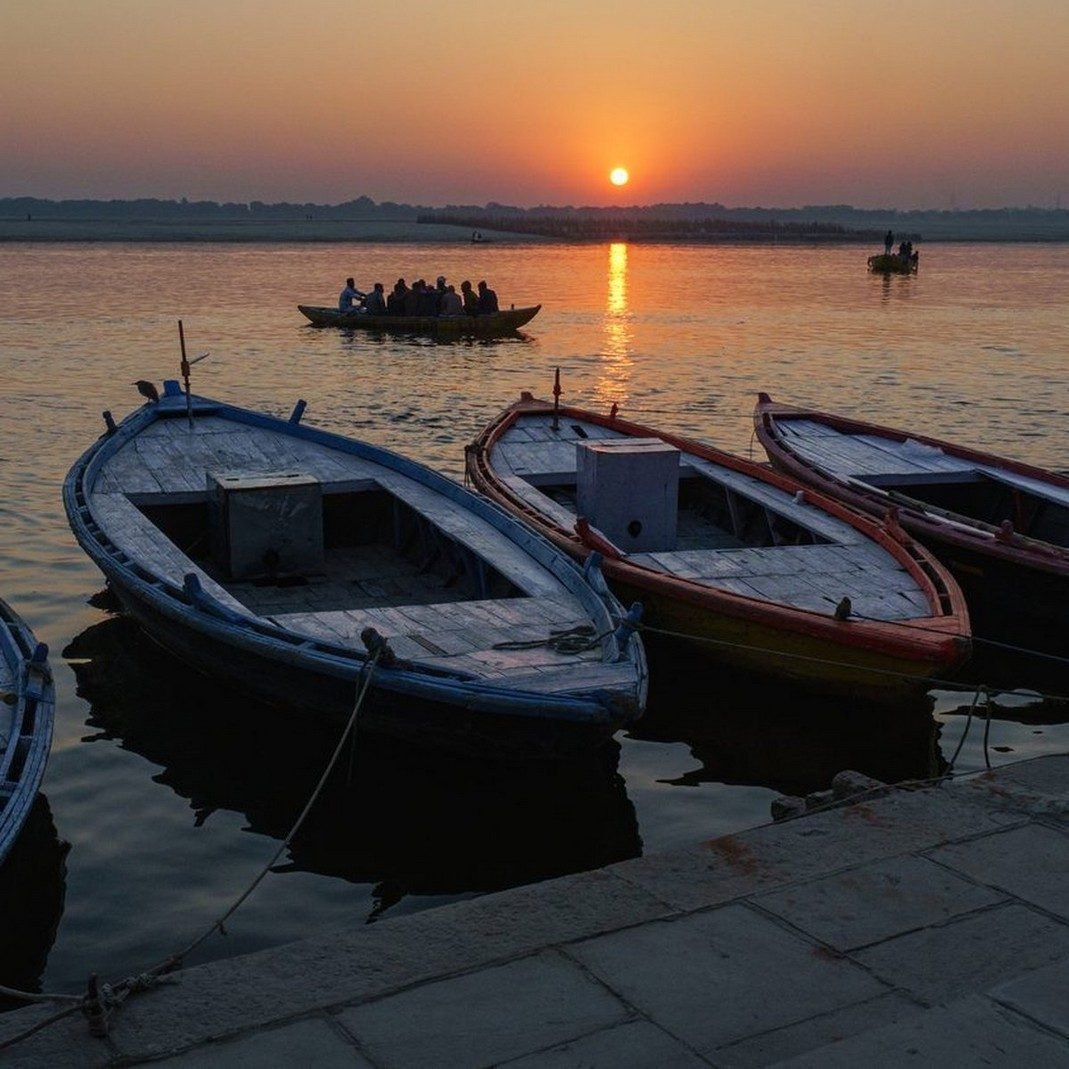
Photo: Schwiki / Wikimedia Commons (CC BY-SA 4.0)
The Weight of the Name
No state on my map carried more freight than Uttar Pradesh. Two hundred and forty million people, a population that would rank among the largest countries on Earth if the state seceded from the atlas, and a concentration of India's imagination so dense it distorts the compass: the Taj Mahal, the Ganga at her most worshipped, Rama's Ayodhya, Krishna's Mathura, the Buddha's first sermon, the Nawabs' Lucknow, and at Prayagraj, every twelve years, the Kumbh Mela, the largest gathering of human beings our species has ever managed for any purpose whatsoever. I had been circling this state for months the way you circle a difficult chapter in a syllabus. The train from the south crossed the Ganga on a long iron bridge at dusk, the water below already carrying its first evening lamps, and I gave up circling.
There was also a private reason, which I had not written on any list. I had been to Varanasi once before, at six, and remember almost none of it. My nannamma, my father’s mother, had died that spring, and my parents took her ashes north the way families from our coast have always taken them: by train, in a small pot wrapped in cloth, with a child brought along because there was nobody to leave him with. I remember the pot. I remember being told not to touch it and touching it anyway, and finding it ordinary, and slightly warm from the compartment. I remember my father lifting me at the ghat so I could see over the shoulders of the men. I do not remember the river at all.
The city had quietly corrected my punctuation: death, it insists, is a comma.From the chapter
The City That Faces East
Varanasi should be met before sunrise, from the water. My boatman, Chhotu, third generation on these ghats, pushed off from Assi in the dark and rowed north along the city's great crescent as the sky went from iron to rose, and Varanasi performed the act it has performed longer than almost any city on Earth has existed: it faced east and filled with light. The ghats (nearly ninety of them, a staircase city three kilometres long) came alive in sections, like an orchestra tuning. Wrestlers at their morning akhara. Priests raising brass pots of river to the sun. Pilgrims immersing with the sharp inhale the Ganga administers in winter. Laundry slapping stone; tea being poured from height; a flute seller practising his own inventory; and everywhere the murmured mantra of this city's self-understanding. Kashi, the luminous, older than history, contemporary with legend. Mark Twain's famous line gets quoted on every boat, and Chhotu quoted it too, with a proprietor's shrug: older than tradition, older than legend, and looking, he added over his oars, 'twice as old as all of them together, and still awake before you, no?'
The boat drifts, inevitably, past Manikarnika, and every traveller must decide beforehand what they will do with their eyes.
The chapter continues in the book…
- AnticipationThe Weight of the Name
- ArrivalThe City That Faces East
- ExplorationThreads, Sermons and a Maze
- DiscoveryThe Postcard, Corrected
- The TableFrom Chowk to Ghat
- FarewellWhat the River Carries
Uttar Pradesh, from the road

Read Chapter 16 in full
The complete Uttar Pradesh chapter — with when to go, getting around, what things cost, what to eat and how to travel responsibly — is in 28 Shades of India.