West Bengal
The City of Addas and the Tide Country
“Kolkata does not ask what you do. It asks what you think — and then disagrees, affectionately, for three hours, over one cup of tea.”
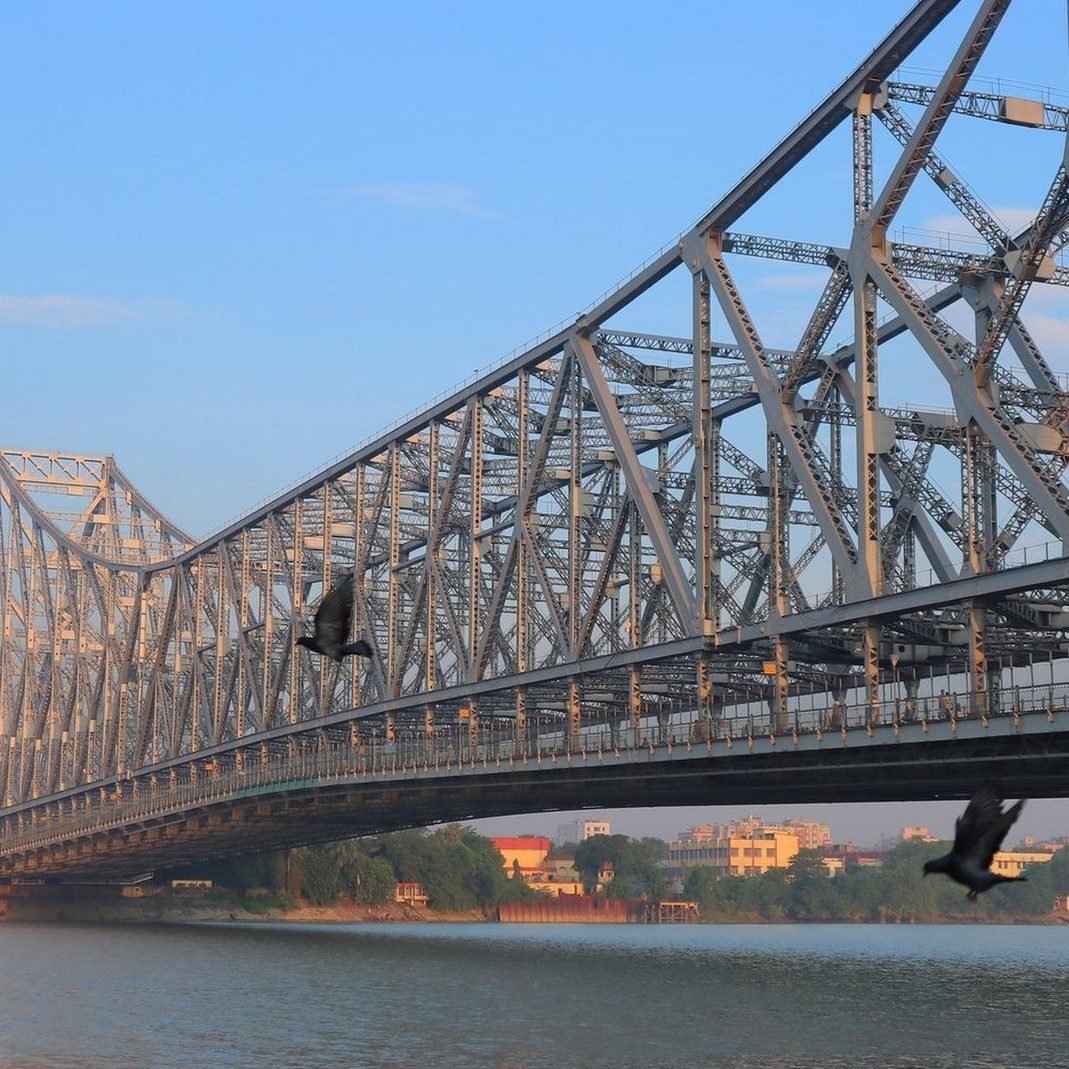
Photo: Pradip paswan / Wikimedia Commons (CC BY-SA 4.0)
Descending into the Delta
From the aeroplane, after Ladakh's mineral silence, Bengal looked like the earth had been rewritten in water: rivers braiding, ponds by the thousand catching the evening sun like dropped coins, green so saturated it read as a correction of everything west of it. This is the Ganga's last act, the river I had met as a child at Devprayag and a grandmother at Varanasi here dissolves into a hundred distributaries and hands herself to the sea, and on the delta's highest ground stands the city that was, for a century and a half, the capital of British India and has been, for far longer than that, the capital of Indian argument. Everyone had briefed me on Kolkata with the same warning delivered as a recommendation: 'Nothing works, everything matters.' The airport taxi, a yellow Ambassador of an age entitled to a heritage plaque, driven by a man who spent the ride critiquing a poet, confirmed the brief within four kilometres.
Nothing works, everything matters.' The taxi confirmed the brief within four kilometres.From the chapter
The Parliament of Tea
Kolkata's governing institution is not in Writers' Building; it is the adda, the open-ended, agenda-free session of talk that Bengalis have elevated from pastime to art form to constitutional right. Its high court sits on College Street, the boi para, a kilometre of second-hand bookstalls stacked to visual impossibility, where I watched a stall-keeper locate a specific 1962 physics text from memory in under a minute, extracted from a tower that would have defeated an archaeologist. Above the stalls, up a staircase of scuffed grandeur, the Indian Coffee House has hosted the city's arguments since before Independence, turbaned waiters, ceiling fans doing their slow devotional rounds, and every table an adda in session: students dismantling a film, two old men re-fighting a chess game from the seventies, a table of aunties resolving a wedding. I took a corner seat with a coffee and was absorbed within minutes, a retired professor at the next table, learning I was travelling all of India, required my findings, contested three of them, conceded one, and ordered me a second infusion by way of settlement. The adda's rules, as I compiled them over a week: everyone may speak, no one must conclude, tea extends automatically, and departure requires three separate goodbyes, none binding. It is the most civilised institution I met on this journey, and it produces, as far as I could establish, absolutely nothing except Bengalis, which the city considers output enough.
The chapter continues in the book…
- AnticipationDescending into the Delta
- ArrivalThe Parliament of Tea
- ExplorationThe Goddess Being Born
- DiscoveryThe Tide Country
- The TableThe Civilisation of the Fish and the Sweet
- FarewellNext Year, It Will Happen Again
West Bengal, from the road

Read Chapter 27 in full
The complete West Bengal chapter — with when to go, getting around, what things cost, what to eat and how to travel responsibly — is in 28 Shades of India.